Welcomed, Not Tolerated: Reviewing Assistance Dog Policy Across UK Workplaces and Services
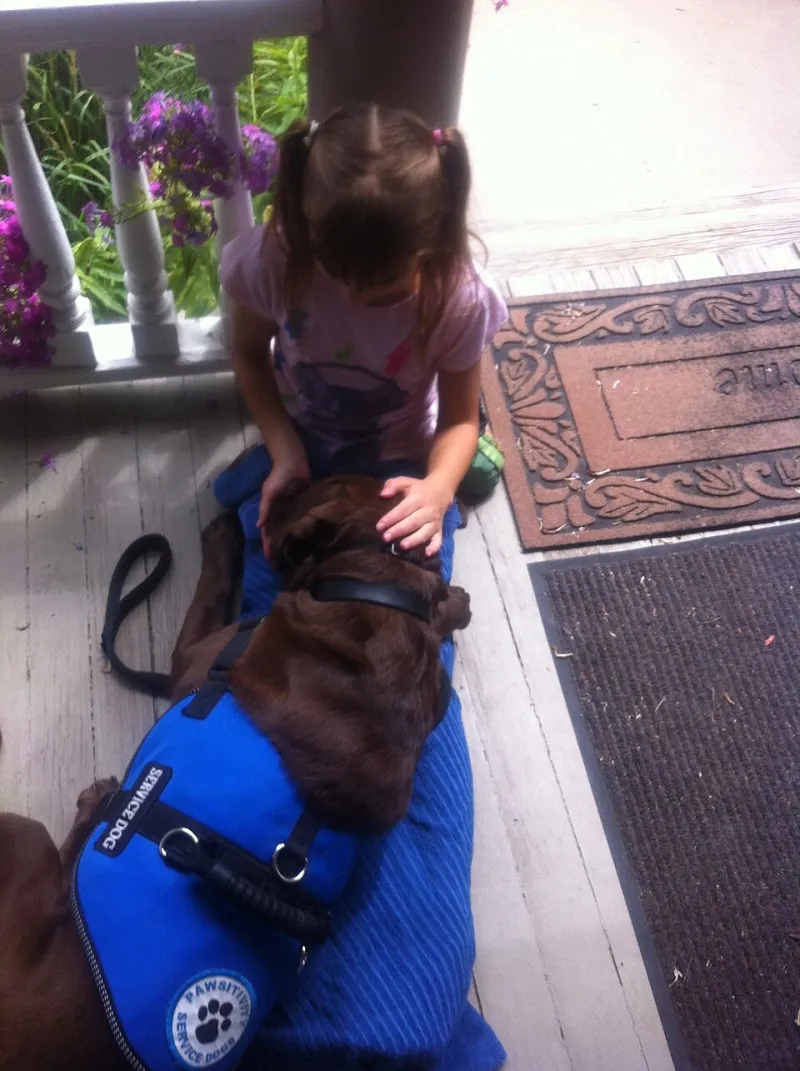
Photo: Zipster969, pawsitivityservicedogs.com, CC BY-SA 4.0, via Wikimedia Commons
Under the Equality Act 2010, employers and service providers in the UK have duties to make reasonable adjustments for disabled people, and refusing access to a trained assistance dog can amount to discrimination unless there is a lawful justification. That is the legal baseline, and this article is not legal advice. The more useful question for most organisations is narrower: does our day-to-day practice match what our policy claims?
All too often it does not. A policy written years ago says the right things, while the reception desk, the booking system and the meeting room have never been asked to deliver them.
Begin with the wording
Read the policy as a disabled customer or candidate would. It should state plainly that assistance dogs are welcome, define what is meant by an assistance dog, and describe what happens when someone arrives.
Watch for language that quietly converts a right into a request. Phrases such as 'assistance dogs may be permitted on request', 'subject to approval', or 'advance notice required' all create a gate where none should exist. So does a demand for a certificate: there is no single mandatory UK identity document for assistance dogs, and asking for one at reception is both unreliable and unwelcoming.
A workable definition covers guide dogs, hearing dogs, medical alert and detection dogs, and dogs trained by the handler themselves where they meet the legal definition. Owner-trained does not mean untrained.
The first thirty seconds
Reception sets the tone for everything that follows. The script should be short and should address the person rather than the dog: a greeting, a confirmation of the appointment or visit, and an offer of practical help.
Staff should not touch, call to, feed or make prolonged eye contact with a dog that is working. If a colleague wants to greet the dog, the question goes to the handler and a refusal is a complete answer.
The genuinely useful questions are practical ones. Where is the nearest step-free route to the meeting room? Is there a bowl and a tap nearby? Where is the nearest outdoor space where the dog can relieve itself, and is there a bin? Does the handler prefer to sit at the end of a row, at the back, or with clear floor space alongside them?
Booking notes that travel
A booking field that says an assistance dog will be attending is only useful if it reaches the people who need it: front of house, the room booker, catering, cleaning and security. Test that flow rather than assuming it. Then test it again for events booked at short notice.
Train the people who read the field to act on it without a follow-up phone call. A note that triggers a series of clarifying calls to the visitor has the opposite effect to the one intended, and a note flagged in red as a special case tells staff to treat a routine access need as an anomaly.
Routes, rooms and facilities
An assistance dog needs the same step-free route as the handler. If the accessible entrance is a goods door at the rear, the dog goes through the goods door too, and the experience should still feel like a front door.
Inside the building, floor space beside the handler's seat matters more than most room plans allow for. Dogs should not be positioned in a through-route, under a table where feet will find them, or in a space that blocks a fire exit. Some handlers find smooth, non-slip flooring easier for a dog to settle on, and a quiet corner is often preferable to the centre of a busy room.
Water, a relief area and waste bags are the practical essentials. None of them is expensive. Their absence is noticed immediately.
Allergies, fears and staff concerns
Genuine allergy concerns and phobias are real, and they deserve a proper response. The response, however, is management rather than exclusion: seating distance, airflow, cleaning routines, or a change to where a colleague is based. If a staff member has a severe allergy, that is a workplace health matter to be addressed through normal channels, not a reason to restrict a customer's access.
What should not happen is asking the handler to prove the need, provide medical evidence at the door, or accept a reduced service while the organisation works something out.
Twenty minutes of training that holds
The most effective staff training on this subject is scenario-based and short. What to do when a dog arrives at reception. What to do when a dog is in a meeting room. What to do if a dog needs to go outside during a long event. What to say when a colleague wants to pet the dog. What to do when another customer complains.
For each scenario, staff need one sentence they can say and one person to escalate to. That is usually enough to prevent improvisation.
Recording, learning and reviewing
Keep a simple log of access enquiries and how they were resolved, holding only the details that are necessary. Review the policy and the reception script annually, and after any incident.
Where something has gone wrong, the repair-first approach applies: acknowledge it, fix it, and follow up with the person affected. An assistance dog is not an additional service to be arranged. For the person using it, it is the means by which the service is accessible at all.