Keeping Step-Free Access Moving: A Lift-Outage Contingency Framework for UK Organisations
Lift outages rarely arrive at a convenient moment. A motor fails, a sensor misreads, or a planned maintenance visit overruns, and a route that many people rely on simply disappears. For disabled staff, visitors and service users, the difference between a working lift and a stopped one can be the difference between taking part and being turned away. The answer is not a frantic scramble on the morning of the outage. It is a short, practical contingency plan that is agreed in advance, owned by named people and reviewed after every event.
Start with an access register, not a list of names
Many organisations know which staff have disclosed a disability, but few hold a clear picture of the building routes those staff depend on. A useful contingency plan begins with an access register that records routes and requirements rather than medical details. Which entrances are step-free? Which lifts serve which floors? Where are the accessible toilets, refuges and quiet rooms? Are there doors with heavy closers, thresholds or narrow turns on the alternative route?
The register should be maintained by a named access lead and reviewed at least twice a year. It should also record preferred contact methods and any pre-agreed adjustments, with consent. The purpose is not to label people but to reduce the need for repeated explanations during a stressful event. A short conversation in advance is nearly always better than a rushed one at the bottom of a stalled lift.
Set triggers and a clear communication chain
A contingency plan only works if people know when to activate it. Define what counts as a lift outage: a single lift out of service in a multi-lift building may be manageable, while the loss of the only step-free route is a material access issue. Set a trigger for notifying the access lead, facilities, reception and the communications team. Include out-of-hours arrangements and a named deputy, because outages do not always respect office hours.
Communication should be quick, plain and channel-appropriate. A short notice at entrances, a message on the intranet and a direct note to anyone on the access register will usually cover the main audiences. Avoid vague wording such as “access may be affected”. State which route is unavailable, which alternative is open, who to contact and when the next update will be issued. Where an alternative route is longer or requires assistance, say so plainly and offer a conversation about adjustments rather than leaving people to work it out alone.
Verify alternative routes before they are needed
An alternative route is only an alternative if it works. Walk it with a wheelchair user, someone with limited mobility, a person with a visual impairment and a colleague who uses crutches or a walking aid. Check gradients, surfaces, door widths, thresholds, lighting, weather protection and the distance from the nearest public transport stop. Confirm that temporary signs are readable and placed at decision points, not hidden around a corner.
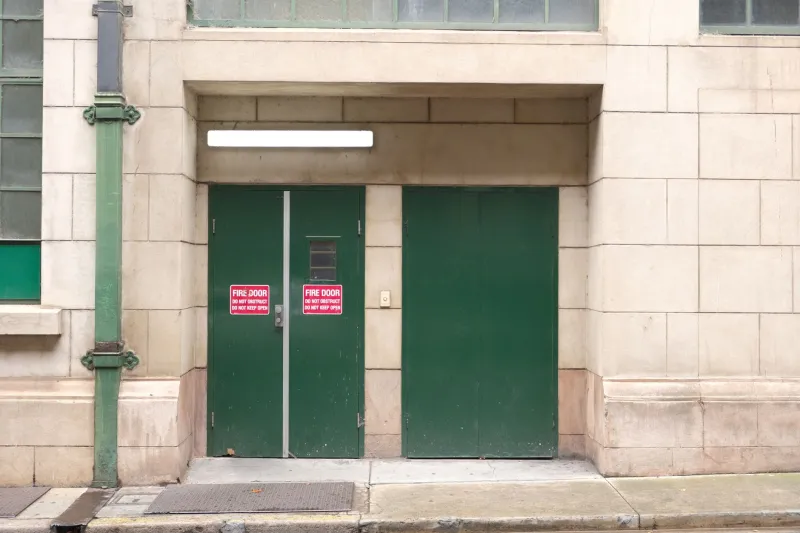
If the only step-free route runs through a service corridor or goods entrance, consider how that will feel for visitors. Dignity matters. A route that is safe but feels like a back-door compromise should be improved where possible, with clear signage and a staffed welcome. For buildings with multiple entrances, agree in advance which entrance becomes the default step-free entrance and who is responsible for unlocking and staffing it.
Use temporary adjustments that are realistic
Not every outage requires a full building shutdown, but some do require temporary changes. Common options include moving meetings to ground-floor rooms, relocating a team to another site, allowing remote work at short notice, offering adjusted hours to avoid crowded travel, and arranging for documents or equipment to be delivered to an accessible location. If a temporary ramp is used, it must be suitable, secured and deployed by someone competent to do so; improvised solutions can create new risks.
Consider the small details that make a difference: accessible toilet provision on the same level as the temporary route, a rest point along a long diversion, clear instructions for visitors, and a named person to meet anyone who needs assistance. Keep a small contingency kit with signage, a charged phone, a printed route map and contact details. It does not need to be elaborate, but it should be checked regularly.
Name the responsibilities
Contingency plans fail when everyone assumes someone else is handling it. Assign clear roles: an access coordinator who owns the plan, a facilities contact who liaises with the lift contractor, a communications lead who issues updates, reception or security staff who manage the alternative entrance, and HR or line managers who contact affected staff. Record these roles in the plan and include them in induction and absence planning.
Suppliers matter too. Check the lift maintenance contract for response times, out-of-hours cover and the contractor’s procedure for keeping building users informed. A service-level agreement is not an access plan, but it provides the timeline on which the rest of the plan depends.
Review after every outage
A post-incident review should take place within five working days. Keep it short and practical: what failed, who was affected, how quickly the alternative route was opened, whether communications were clear, and what should change. Record actions with owners and dates. Over time, patterns will emerge, such as repeated faults on a particular lift or a diversion route that is too long for regular use.
The test of a contingency plan is not whether it looks thorough in a folder. It is whether a person who relies on step-free access can still get to their desk, meeting or appointment with minimal fuss and with their dignity intact. For UK organisations in 2026, that is a reasonable standard to plan for before the lift next stops.