Moving Adjustments Closer to the Work: A Manager-Led Playbook for UK Employers in 2026

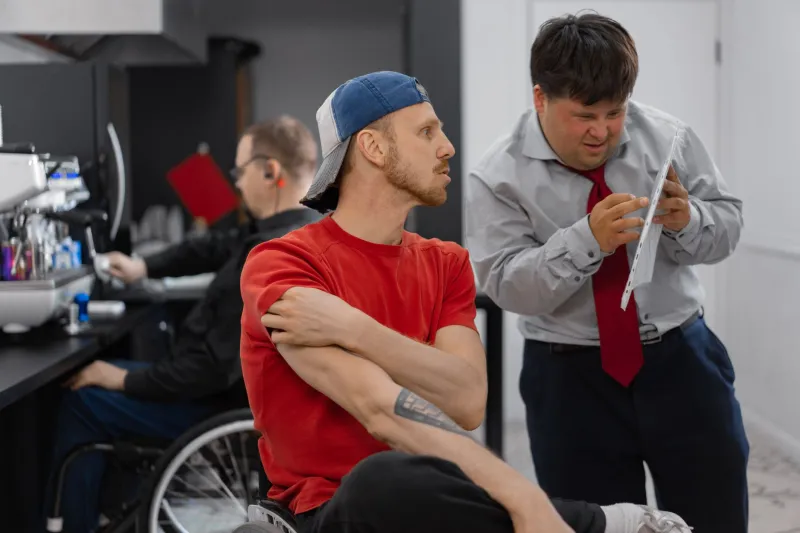
Photo: manager discussing workplace adjustments with employee in UK office, via www.spaceopedia.com
The queue problem
Reasonable adjustments are a legal duty under the Equality Act 2010, but in many organisations they arrive through a narrow door. A request goes to HR, waits for a case worker, is discussed with a manager, returns for approval and eventually reaches the person who needed the change. For straightforward adjustments such as a different start time, a screen reader licence, a quieter desk or written instructions after meetings, the process can take longer than the adjustment itself.
The argument here is not that HR should step back from accountability. It is that routine decisions can move closer to the work without losing consistency. A manager-led playbook gives managers clear guardrails, a small budget and an escalation route. HR retains oversight, advice and the difficult cases. The result should be faster enablement, fewer repeated conversations and a clearer audit trail.
Why local decisions help
Managers usually know the work context. They can see whether a change in meeting format will help the whole team, whether a piece of equipment is practical and whether a temporary adjustment is likely to become permanent. When they can act quickly, the conversation stays focused on removing the barrier rather than navigating the process.
Local decisions also reduce the risk of presenteeism and avoidable absence. If someone is waiting weeks for a simple change, they may struggle on, take leave or consider leaving. Speed matters. So does consistency: a manager-led model only works if managers are not left to improvise.
Design the playbook around three tiers
A practical playbook separates adjustments into tiers. The tiers should be agreed with HR, legal advisers where appropriate, and staff representatives. They should be written in plain English and reviewed regularly.
Tier one: pre-approved adjustments
These are low-cost, low-risk changes that managers can authorise without a formal case. Examples might include:
- flexible start and finish times within agreed core hours;
- a temporary change to meeting patterns, such as shorter sessions or written follow-ups;
- noise-cancelling headphones or a different chair from an approved catalogue;
- accessible software settings or a licence already held by the organisation;
- transferring internal information into an accessible format.
A one-page guide should state what is covered, the spending limit, how to record the decision and when to seek advice. The limit does not need to be large. A modest local budget, with a monthly cap, can remove the most common delays.
Tier two: manager decides with advice
This tier covers adjustments that are still routine but need a conversation with HR or IT. Examples include changes to working patterns that affect team cover, specialist equipment above the local limit, or adjustments that interact with a performance process. The manager remains the decision-maker, but the playbook sets a short response time and names the adviser.
Tier three: formal or complex cases
Some situations need a formal process: conflicting adjustments, significant cost, health and safety implications, or a request that affects other people's terms and conditions. These should go to HR with a clear escalation trigger. The playbook should say what information is needed and what the person can expect while the case is considered.
Give managers decision guides, not scripts
Managers need more than a list of approved items. They need a decision guide that helps them ask good questions: What barrier is the person experiencing? What would remove or reduce it? Is the change temporary or ongoing? Does it affect the team, and if so, how can that be managed? What is the cheapest effective option? When should I stop and ask for advice?
A guide should also cover communication. The person requesting an adjustment does not have to disclose a diagnosis. Managers should focus on the effect of the barrier and the change needed. They should explain the process, give a timescale and confirm the decision in writing. If the answer is no, they should explain why and offer an alternative where possible.
Keep consistency and accountability
The strongest objection to manager-led adjustments is inconsistency. One manager may approve a request that another refuses. A playbook reduces that risk through clear tiers, a shared record and regular calibration.
A simple central register can record the type of adjustment, the tier, the decision, the cost and the outcome, without storing sensitive medical details. HR can review the register quarterly to spot patterns, check spend and identify training needs. Managers can meet periodically to discuss difficult cases and compare approaches. This is not bureaucracy for its own sake; it is how a local model stays fair.
Accountability should sit with the employer, not disappear into local discretion. The playbook should state that managers are authorised to act within the tiers, that decisions are recorded, and that HR can review or escalate any case. Access to Work can be part of the funding picture for some adjustments, but it should not be used as a reason to delay a low-cost change that the organisation can make now.
A 2026 implementation plan
A sensible rollout can be completed in a quarter.
- Map current demand. Review the last twelve months of adjustment requests and identify the routine cases that consume the most time.
- Agree the tiers. Work with HR, legal and staff representatives to define what managers can approve.
- Set a small budget. Start with a modest monthly limit and a clear approval code.
- Publish a one-page guide. Include examples, timescales and escalation triggers.
- Train managers. Use realistic scenarios, including communication and record-keeping.
- Launch with a review date. Check decision times, spend, consistency and staff feedback after three months.
The balance to strike
A manager-led playbook is not a licence to bypass HR or to treat reasonable adjustments as a favour. It is a way to put routine decisions where the context is richest and the delay is shortest, while keeping guardrails and oversight. For UK employers in 2026, the prize is practical: fewer bottlenecks, faster enablement and a more consistent experience for the people who need change. The playbook should be reviewed as the organisation learns, because the aim is not simply to move the queue. It is to make the queue shorter for the cases that do not need it.